Careers & Scholarships
The Australian cotton industry encourages new people to join our industry who have a passion to innovate, work collaboratively, and help clothe and feed our growing population in a more sustainable way.
Cotton Australia educator & student scholarships announced
Connecting students and educators to our industry is paramount in ensuring Australia has a strong and vibrant cotton sector and attracts the best minds to help further our industry.
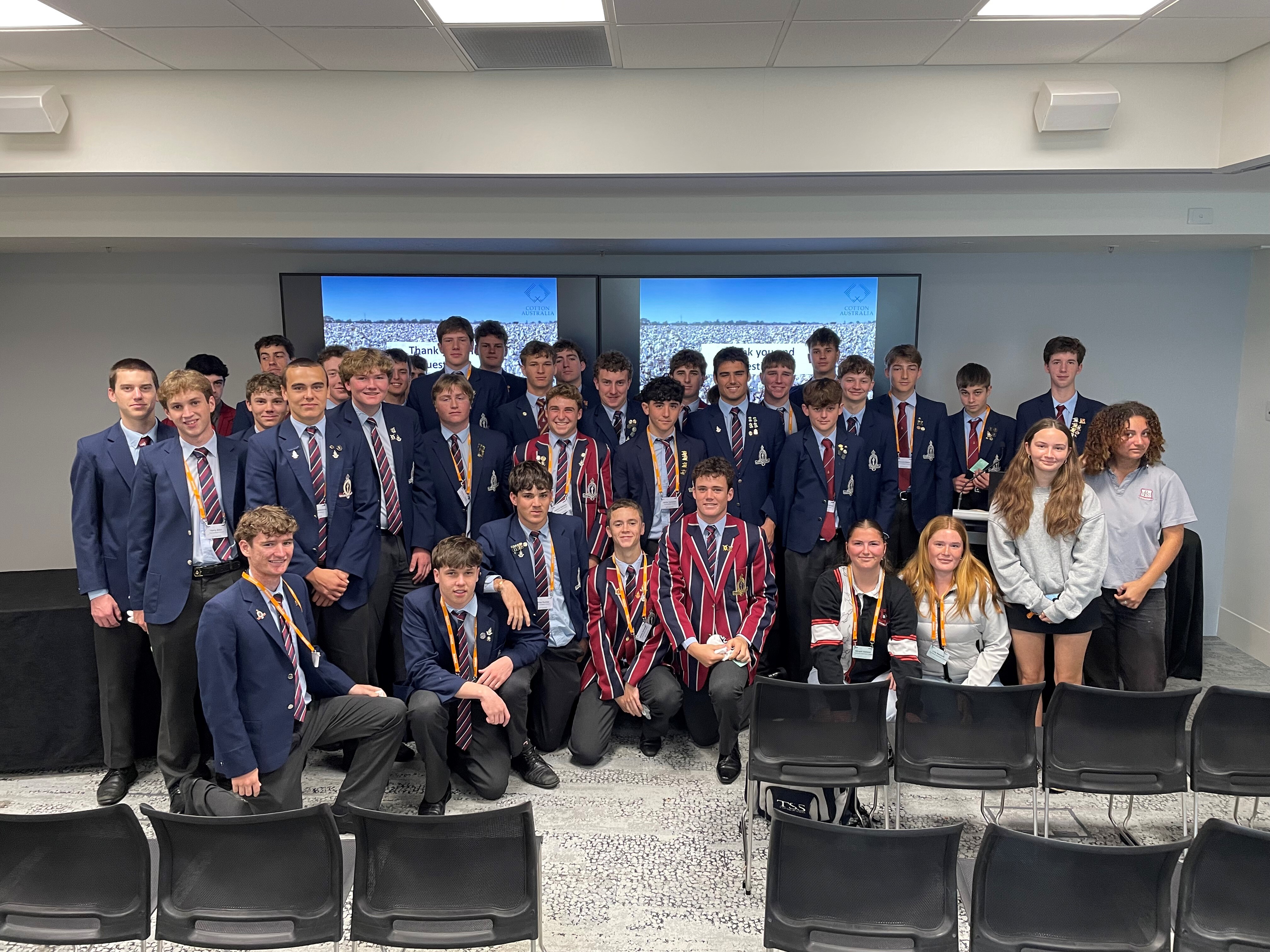
Cotton Australia and Cotton Research and Development Corporation (CRDC) are offering a range of scholarships to the biennial Australian Cotton Conference for educators and students who are passionate about cotton and natural fibres. The aim is to further their knowledge and understanding of cotton whilst learning about the variety of career opportunities within the cotton industry.
The event brings together new and experienced farmers, agronomists and researchers, brands and marketers, students and educators, supply chain partners, industry groups and cotton supporters. Together we explore a wide range of issues, ideas and opportunities from a variety of standpoints. You will walk away informed, challenged, inspired and motivated to do your bit for the future of the Australian cotton industry.
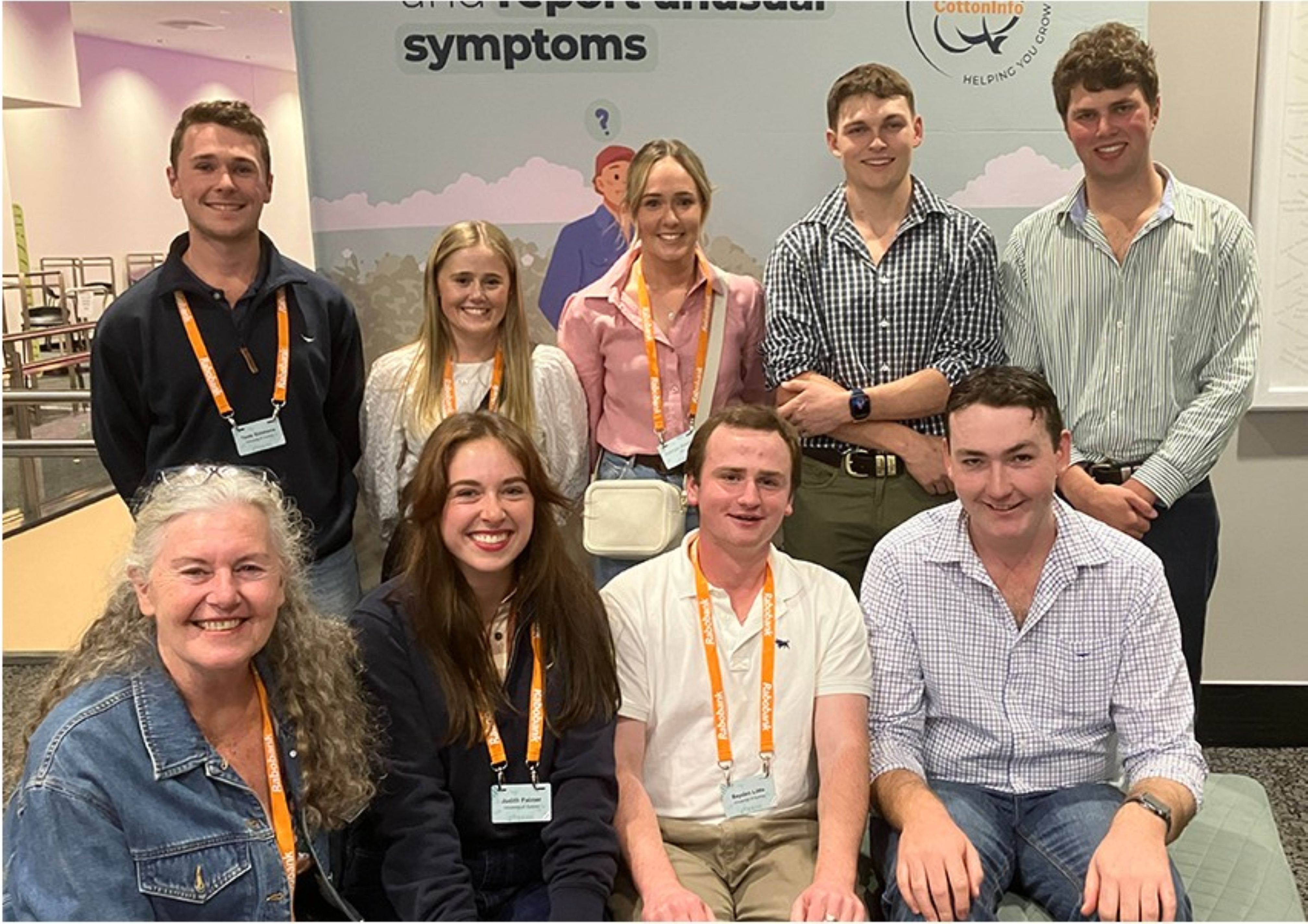
“I certainly found my main value from the conference, was the openness and kindness of this industry sectors workers. Their desire to develop the future generation like us undergrads, not only in providing industry experience opportunities, but vital knowledge to build our career path. In particular, individuals’ willingness to take their time to chat to us and understand our skills/desires and even introduce us to other colleagues or their own industry company network, purely out of kindness, made the experience more valuable than it would’ve been from solely my own networking.” Bayden Little from University of Sydney; Undergraduate Scholarship for 2024

About the program
There are three categories of Cotton Australia Scholarships available, as detailed below:
- Senior Secondary Students accompanied by a supervising teacher (4 August 2026 only)
- Educators from Primary to Secondary School or Tertiary Education (5 - 6 August 2026)
- Undergraduate Students enrolled in a relevant university course (4 - 6 August 2026)
Successful applicants will receive conference registration for designated days and assistance in covering travel and accommodation to the Australian Cotton Conference in the Gold Coast between 4 - 6 August 2026. The amount offered will depend on the needs of each student/educator with respect to travel and accommodation expenses.
The application process is simple!
If you would like to apply for a Cotton Australia scholarship to the Australian Cotton Conference in 2026, you must be currently studying or teaching in Australia and have a robust interest in the Australian cotton industry.
Questions can be directed to the Cotton Australia Education Manager: [email protected]
Applications are now open and close 5pm (EST) Friday 26 June 2026.
What jobs are there in cotton?
The Australian cotton industry’s work force includes on-farm labour, as well as the service industry and supply chain, which represents an extensive network of input and advisory providers that support cotton farmers (such as agronomists, researchers, consultants, agribusiness and state government agencies).
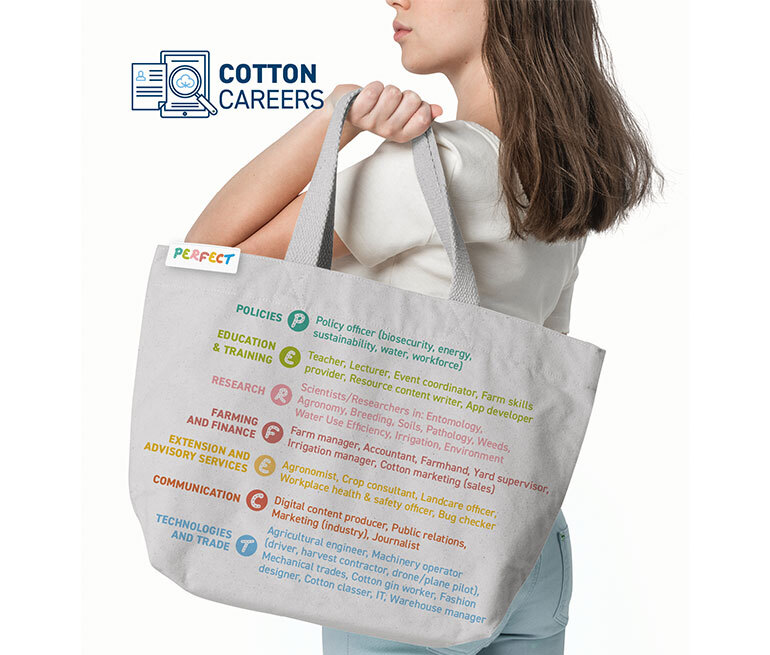
Cotton careers can be grouped into seven categories, as shown in the PERFECT Cotton Careers infographic, to show the key jobs that are involved in the cotton industry:
- Policy
- Education and Training
- Research
- Farming and Finance
- Extension and Advisory Services
- Communication
- Technologies and Trade
Each of these categories have different focus areas and pathways, and shows that the industry needs people with a huge range of skills and knowledge.
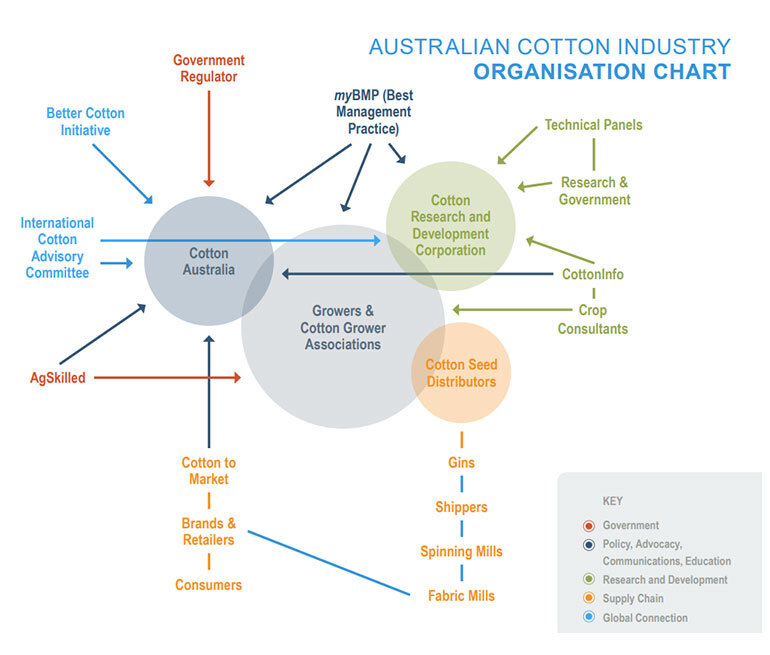
Cooperation and collaboration are fundamental to the success of the cotton industry in Australia, and it is well known for its transparency and sharing of information right across the supply chain. To achieve success, growth, and sustainability long-term, the industry works together to proactively address tomorrow’s challenges. The Australian Cotton Industry Organisation Chart serves as a guide to demonstrate how everyone, from the growers to the government regulatory bodies interact to create world class cotton.
Workforce attraction on a cotton farm
The dynamics of the industry’s work force varies depending on factors such as season, location and business size.
Cotton growers generally attract employees using a range of tools, including word-of-mouth, employing local youth and school students as trainees, using recruitment specialised labour hire companies, and webpages such as Seek, Facebook and Gumtree. They use a range of strategies to retain staff, which may include attractive salary packages that often include on-farm accommodation and meals, training, flexible working arrangements, mentoring, opportunities to have a stake in the business and/or promotion.
For people that have not grown up on a farm or in a rural region, it can be difficult to imagine what a career or casual position on a cotton farm looks like. A great place to start researching is the People in Agriculture website, looking under the Guide for Employees tab.
To learn more about a job in agriculture, Career Harvest has case studies, videos and job descriptions to help you understand the variety of roles and responsibilities in the farming sector.
AgCareerSTART

Cotton Australia is proud to partner with the National Farmers’ Federation to support AgCareerSTART Farming gap year.
AgCareerSTART is a structured gap year program encouraging young Australian to try a career in agriculture by connecting them to jobs on Australian farms.
Delivered on behalf of the Australian Government, the program matches young career seekers with a host cotton farm where they can work, live and study.
On top of the skills, experience and mentoring you will receive working with your farm-host, you will also be provided FarmSafe’s basic safety training and support to complete a VET course relevant to your farm and interests. There will be many opportunities to build your network and access to significant industry events such as the National Farmers’ Federation Conference, AgFEST and AgQuip.

Off-farm jobs in cotton
Both skilled and unskilled positions are required to maintain the cotton industry’s competitive advantage. Cotton researchers actively engage in the future direction of agriculture in emerging areas such as digital technologies, robotics, and innovative engineering.
Unskilled roles in cotton research can include hand-picking cotton, bug checking, or data input. These roles can be either indoors or outdoors.
Artificial Intelligence is one example, as more farmers use technology to provide them with a competitive edge. Information technology graduates are also needed to develop the tools that the modern farm requires. By using robotics combined with AI, farmers can access better information about crop yields and they are better able to project their eventual income levels.
The use of drones is now commonplace, as farmers apply the technology to everything from property security to water, soil, and plant management. The need for people entering agricultural career options with backgrounds in the science, biology, chemistry and physics fields – allowing them to better understand soil management and plant growth – is becoming critical as global markets adapt to climate change.
Seasonal work in cotton gins
Cotton gins are factories that complete the first stage of processing cotton – separating the lint from the seed. Both skilled and unskilled workers are required during peak times, generally from Autumn to Winter, after the cotton crop is picked. Gins are located in cotton growing regions to avoid costly transport, so you will find cotton gins close to where cotton is grown.
Gin workers tend bale presses and remove the processed bales from the gin. They perform machine maintenance and ensure smooth running of processing operations. They operate forklifts and moon-buggies to transport cotton from the holding yard into the gin. As a cotton gin has to go through many procedures, a number of employees are required to participate in this process, making job opportunities arise. This work is great for seasonal jobs, and all training is done on-site.
Pathways
Agriculture has career pathways from short courses, Certificate IIs, through to diplomas.
Universities, TAFE’s, Registered Training Organisations and colleges around Australia offer a range of options.